
Telomeres: The Protective Caps on Our DNA Understanding the Second Hallmark of Aging and Its Connection to Longevity
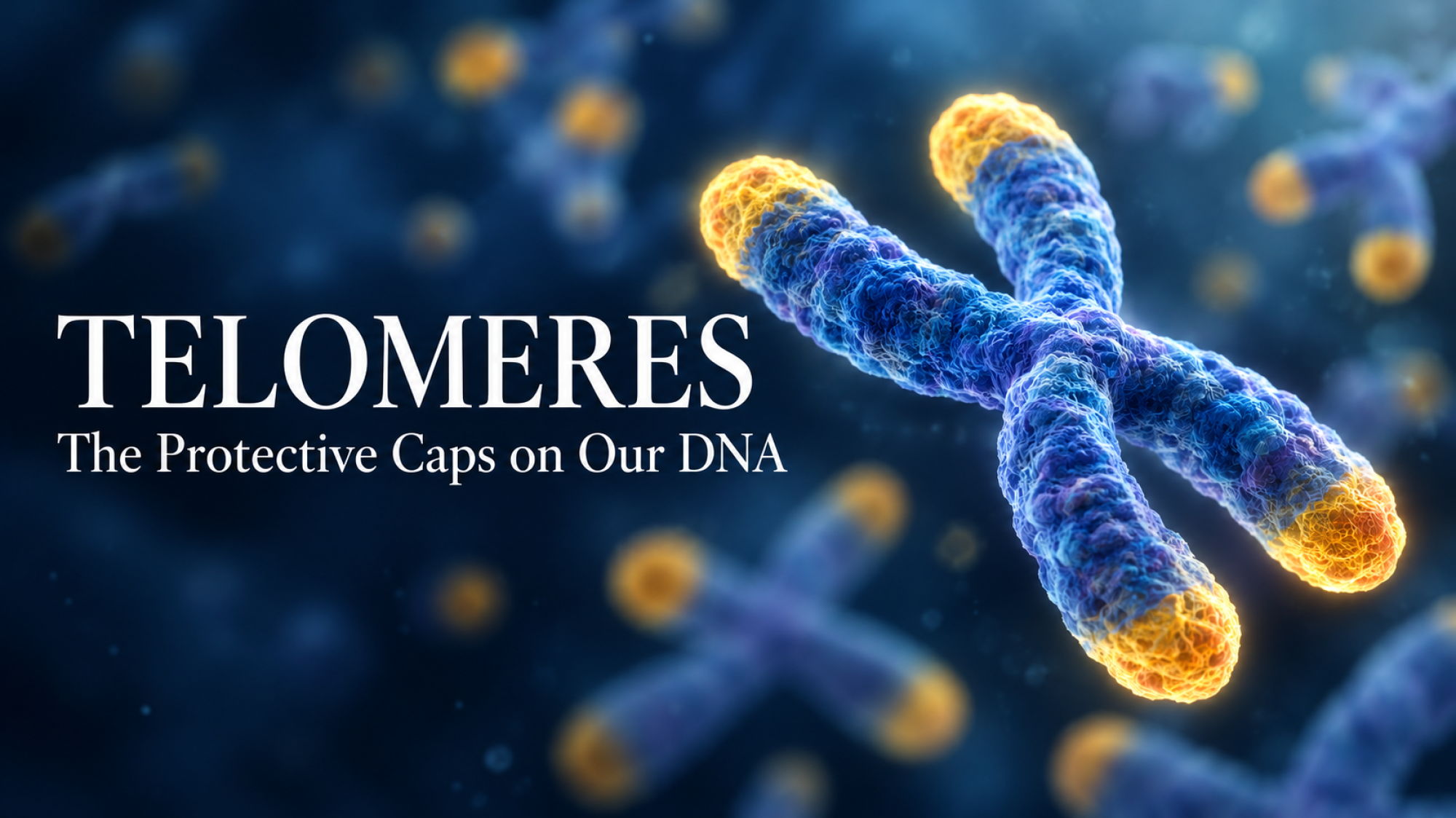
Last week, we began exploring the 12 Hallmarks of Aging, a scientific framework that helps researchers understand some of the biological processes involved in how our bodies change over time. We started with genomic instability, looking at how our DNA is constantly exposed to damage and the remarkable systems our cells use to identify and repair it. This week, we're staying with DNA, but focusing on something a little different: telomeres.
If you've never heard of telomeres before, you're certainly not alone. They're not something most of us think about in our daily lives, but these tiny structures play an important role in protecting our genetic information. They've also become an interesting subject in longevity research because of what happens to them as our cells age. What I find particularly fascinating is that something so small can have such an important role in how our cells function over time.
What Exactly Are Telomeres?
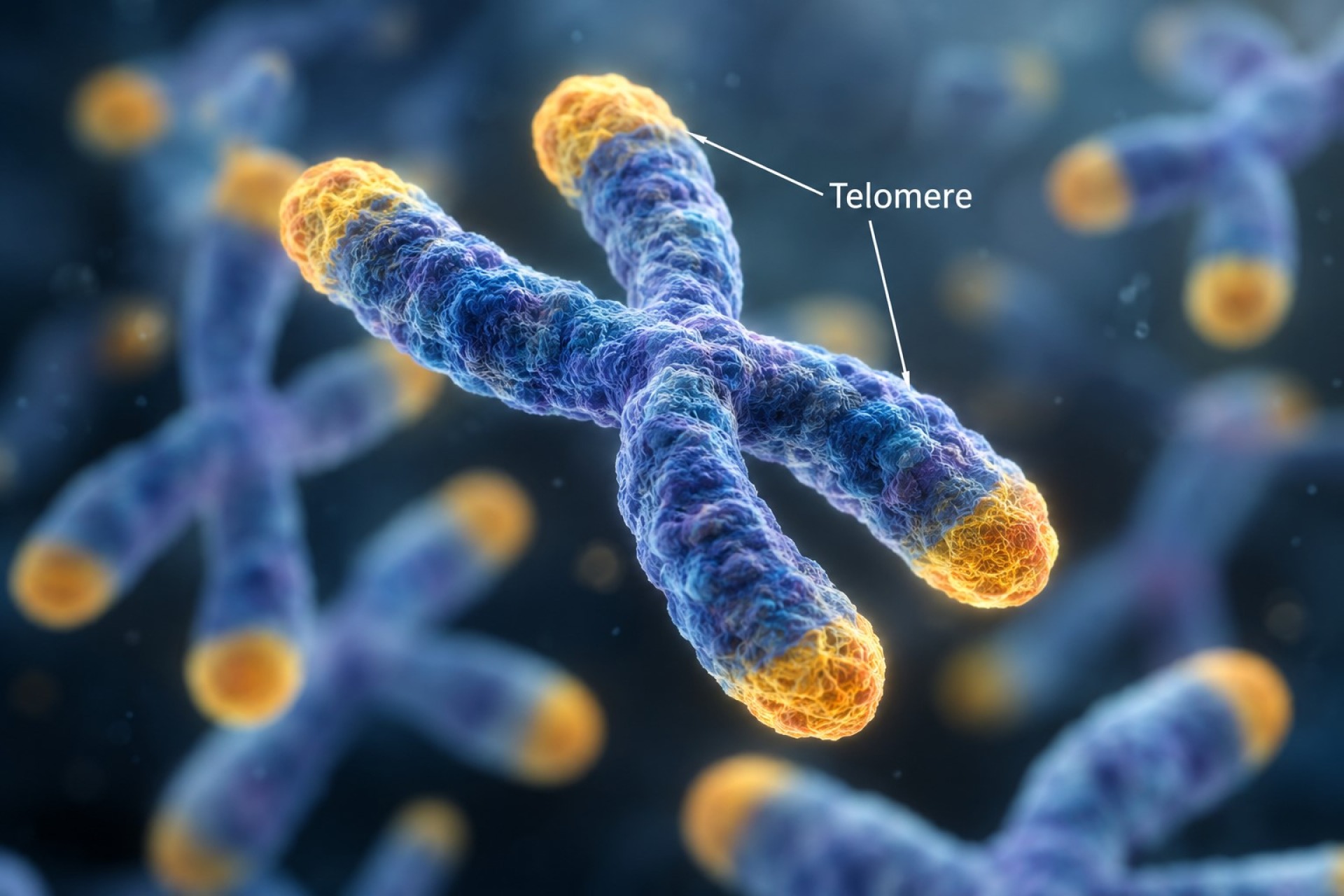
To understand telomeres, we first need to talk briefly about chromosomes. Inside most of our cells, our DNA is organized into structures called chromosomes, which carry the genetic instructions our bodies need to function. At the ends of those chromosomes are protective structures called telomeres.
One of the easiest ways to picture them is to think about the plastic tips on the ends of shoelaces. Those little plastic pieces prevent the laces from fraying and help keep everything together. Telomeres serve a somewhat similar purpose by helping protect the ends of our chromosomes from being mistaken for damaged DNA. They're made up of repeated DNA sequences and associated proteins that help maintain the stability of our genetic material. Without properly functioning telomeres, the ends of chromosomes can become vulnerable to problems that interfere with normal cellular activity.
It's a remarkably clever system, and like many of the biological processes we've been discussing, it operates without us ever being aware of it.
Why Do Telomeres Get Shorter?
Every time many of our cells divide, they need to make a copy of their DNA. However, the machinery responsible for copying DNA cannot completely replicate the very ends of linear chromosomes. As a result, telomeres generally become a little shorter with repeated cell divisions.
Over time, that shortening can become significant. When telomeres become critically short or lose their protective function, cells may stop dividing or activate other protective responses. This is one of the body's ways of preventing potentially damaged cells from continuing to multiply, which is important for protecting us against certain diseases. But there's another side to that protection. As more cells reach these limits, the ability of some tissues to replace older or damaged cells can be affected. This is one reason telomere shortening is considered one of the Hallmarks of Aging.
It's worth noting that not all cells behave the same way. Certain cells, including some stem cells, have mechanisms that help maintain their telomeres. An enzyme called telomerase can rebuild telomeric DNA, although its activity varies considerably between different types of cells. The relationship between telomeres and aging is therefore more complicated than simply saying that shorter telomeres automatically mean a shorter life.
What Do Telomeres Tell Us About Aging?
Researchers have been studying telomeres for decades because of their relationship to cellular division, tissue maintenance, and age-related disease. In general, telomeres tend to become shorter as we age, although the rate of shortening varies considerably between individuals and even between different cells in the same person.
Scientists have also observed associations between shorter telomeres and certain age-related health conditions. However, that doesn't necessarily mean telomere length alone determines how healthy someone is or how long they will live. Aging involves many interconnected biological processes, including DNA damage, mitochondrial function, inflammation, and changes in the body's ability to repair and replace cells. Telomeres are one piece of that larger picture.
I think this is an important distinction because we often hear about biological discoveries being presented as though they hold the single answer to healthy aging. In reality, the human body is far too complicated for that. Understanding telomeres gives researchers another way to study cellular aging, but it doesn't provide a simple countdown clock that tells us exactly how many healthy years we have remaining.
Can We Influence Telomere Health?
Whenever we explore a new aspect of longevity science, I think it's worth asking whether our everyday habits can make a difference. Research has found associations between telomere length and several lifestyle factors, including physical activity, smoking, nutrition, sleep, and chronic stress.
For example, smoking has been associated with shorter telomeres, while regular physical activity and healthier dietary patterns have been linked to more favourable measures of telomere health in some studies. Researchers are also investigating the relationship between chronic psychological stress and telomere shortening, although the findings are not always consistent and many factors can influence the results.
It's important to be cautious about interpreting these relationships. Just because a healthy habit is associated with longer telomeres doesn't necessarily mean that habit directly lengthens them or reverses cellular aging. What we do know is that regular exercise, nutritious food, adequate sleep, stress management, and avoiding tobacco support our health in many well-established ways. Those benefits are valuable regardless of what happens to our telomeres.
This is also where I find some of the newer research into cellular health particularly interesting. Shaklee's Vivix+ was developed around two areas we've discussed in previous articles: supporting NAD+ metabolism and providing polyphenols associated with cellular defense. Shaklee has also investigated its formulation in relation to the 12 Hallmarks of Aging, including telomere attrition, through clinical and laboratory research.
I think it's important to distinguish between studying a biological process and demonstrating a particular health outcome. While telomere attrition is part of the research framework, that doesn't mean Vivix+ has been shown to lengthen telomeres in people. What interests me is the broader effort to understand how different aspects of cellular aging are connected, and how nutritional science continues to develop alongside that understanding. For me, supplements remain one possible addition to a healthy lifestyle, not a replacement for the habits that have consistently demonstrated benefits for long-term health.
Why Longer Isn't Always Better
There's another interesting detail about telomeres that doesn't always get much attention. Because telomere shortening can limit how many times certain cells divide, it also serves as a protective mechanism against uncontrolled cell growth. Some cancer cells are able to maintain their telomeres, often by activating telomerase, which allows them to continue dividing. That means simply trying to make every telomere longer isn't necessarily a sensible goal.
Healthy aging isn't about maximizing one biological measurement. It's about maintaining the balance between cellular protection, repair, renewal, and normal function. I think that's a useful reminder whenever we hear claims about products or treatments that promise to turn back our biological clocks. The science is fascinating, but it deserves to be understood in context.
The Bigger Picture of Longevity
One of the reasons I wanted to spend time exploring the 12 Hallmarks of Aging is that each one gives us another perspective on how our bodies work. Last week, we looked at genomic instability and the importance of maintaining our DNA. This week, we've learned that even the protective structures at the ends of our chromosomes change over time.
These processes don't operate independently. Telomere dysfunction can trigger cellular responses that overlap with DNA damage, cellular senescence, and other hallmarks we'll be discussing in the coming weeks. That's part of what makes longevity research so interesting. Scientists aren't simply studying one part of the body or one aspect of health. They're trying to understand how all these processes interact and what that might mean for maintaining health as we age.
For me, the goal remains the same. I'm not interested in trying to stop time. I'm interested in learning how we can give ourselves the best opportunity to stay healthy, active, and independent for as many years as possible.
Final Thought
Telomeres may be tiny, but their role in protecting our genetic information is anything but insignificant. As our cells divide and age, these protective structures can gradually shorten, influencing how cells respond to stress and whether they continue dividing. Researchers are continuing to investigate how telomere changes contribute to aging and what they can tell us about long-term health.
We may not be able to control the length of our telomeres directly, but we can continue making choices that support our overall health. And perhaps that's one of the most encouraging lessons from longevity research. Understanding the science doesn't mean we need to complicate our lives. Sometimes it simply gives us a better appreciation for why the basics matter.
Next week, we'll explore another fascinating hallmark of aging: epigenetic alterations, and how the way our genes are regulated can change throughout our lives.
Here's to continuing to learn and making the most of the years ahead,
Bob
Bob Ferguson
(913) 208−6357
bob@fergleads.com
https://bobfergusonlongevity.com